



Link copied

We explore how an often-overlooked Alan Jackson performance on ‘You Can Be A Star’ was a sign of what was to come.
Long before American Idol handed out golden tickets, before The Voice spun its first chair and before millions of Americans could vote for a singer from their couch, television had already discovered the irresistible possibility of the overnight sensation.
On January 18, 1948, The Original Amateur Hour made its television debut. Adapted from a popular radio program and hosted by Ted Mack, the show helped establish a remarkably simple formula: give an ordinary person a stage, put a microphone in their hand and introduce them to an audience that could stretch across the country.
The magic was in what could happen next.
For generations of performers, becoming a star meant getting discovered in a nightclub, earning a meeting with the right record executive or spending years working your way toward Nashville, New York or Hollywood. Television introduced another possibility. Someone nobody knew yesterday could step beneath the lights tonight and wake up tomorrow with millions of people knowing their name.
Over the decades, that promise became one of television's most durable formulas. Star Search turned it into sought-after viewing. American Idol transformed it into a cultural phenomenon. The Voice gave it a spinning twist.
But long before viral videos, social media followings or an algorithm could deliver an unknown singer to millions of screens overnight, getting discovered still required proximity.
You pounded the pavement, knocked on doors and found any excuse to get yourself into the rooms where someone might be listening. There was no upload button and no guarantee that talent alone would find an audience. Sometimes, you simply had to get close enough to opportunity and hope it noticed you.
In 1985, a 27-year-old singer from Newnan, Georgia did exactly that. And he wasn't even a contestant.
Alan Jackson had come to Nashville chasing the same dream as thousands before him. Stardom, however, remained a long way off. He landed a slightly unglamorous job working in the mailroom at The Nashville Network, where he would sometimes sit in the audience during tapings of You Can Be a Star, TNN's televised singing competition.
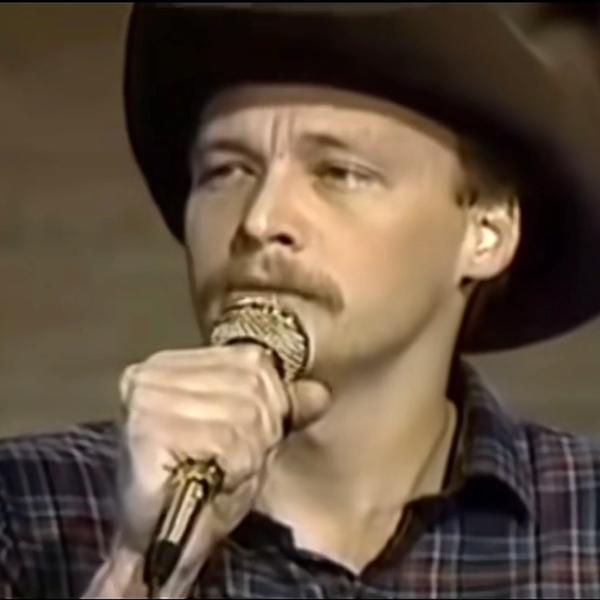
During one of those tapings, Jackson was plucked from the audience and handed a microphone. The future Country Music Hall of Famer was introduced simply as "Al” with a song choice that was daring, to say the least.
Jackson sang George Jones' ‘He Stopped Loving Her Today,’ a song defined by one of the most singular voices in country music. Plenty of singers have attempted to recreate the magnetic pull of Jones' voice, particularly the phrasing and unhurried pacing that made Jones’ performances feel like overt confessions.
Yet, Jackson didn’t try to out-Jones George Jones. Instead, without a hint of visible nerves, he honored the original while offering an early glimpse of the qualities that would eventually make his own voice unmistakable. There is an immediate comfort to the way Jackson sings, an ease that feels almost startling when you consider the stakes.
This is an unknown singer, handed a microphone, yet nothing about his performance suggests he considers the moment too big for him. His stage presence was even more revealing.
Jackson doesn't retreat from the camera. He leans into it, staring directly into the lens without hesitation, as if somewhere beyond it he can already see the audience he has spent years trying to reach. As the segment rushed to a commercial break, Jackson’s voice never broke for a second, hoping to reach each ear listening. Among those was guest judge and singer-songwriter Keith Stegall. It was the first time Stegall heard Jackson sing.
In the years ahead, Stegall would become one of the architects of Jackson's sound, eventually producing 19 of his albums and helping transform this Georgian moustachioed wonder into one of the most influential country artists of his generation. But that future was hardly guaranteed when Jackson handed back the microphone.
He hadn't won You Can Be a Star. He hadn't even competed. And this wasn't some magical television moment that instantly transformed an anonymous singer into a country superstar. Jackson still had work to do, songs to write, doors to knock on and plenty of reasons to wonder whether Nashville would ever make room for him.
What he had done was recognize an opportunity. This wasn't a throwaway moment. It was one of many Jackson understood could bring him closer to what his heart desired.
Working in the mailroom wasn't separate from the dream. Sitting in that studio audience wasn't separate from the dream. In an era when there was no way to go viral from your bedroom, simply getting yourself close enough to the right people could be part of the work. And when his chance arrived, however unexpectedly, Jackson didn't shrink from it. He looked straight into the camera and sang.
Alan Jackson didn't need a golden ticket. Nearly two decades before American Idol even existed, he had already understood the most important part of the formula: when somebody finally hands you the microphone, you better be ready to sing.