




Link copied

Act I: The Individual
Two distinct voices. Two remarkable careers. One shared inheritance.
For Lorrie Morgan and Pam Tillis, country music was something of a birthright. Both daughters of celebrated country performers, they grew up surrounded by the traditions and expectations of Nashville's musical establishment. Yet when their own careers flourished, neither seemed interested in simply preserving the legacies they had inherited. Instead, they set about creating something entirely their own.
For Morgan, the daughter of Grand Ole Opry star George Morgan, that meant developing a voice capable of making even familiar country sentiments feel startlingly personal. By the time her debut album, Leave the Light On, arrived in 1989, she had mastered an unmistakable theatricality, balancing polished delivery with emotional complexity. She could inhabit heartbreak without surrendering to it, deliver a warning without losing her composure, and transform romantic disappointment into high drama.
The album's breakthrough single, ‘Five Minutes’, captured that balance beautifully. Morgan delivered its romantic ultimatum with the conviction of someone who had already made peace with walking away. Her follow-up, 1991's Something in Red, expanded that emotional vocabulary. Across ‘We Both Walk’, ‘Except for Monday’, and the sweeping title-track, she moved between independence and the devastation of love unraveling.
Tillis, meanwhile, was navigating a different inheritance. The daughter of country legend Mel Tillis, she spent years experimenting with pop music and developing her songwriting before finding commercial success. Her breakthrough arrived with 1991's Put Yourself in My Place, introducing an artist whose greatest strength was her ability to inhabit a lyric without overwhelming it.
Where Morgan brought a theatrical intensity to her performances, Tillis found resolute power in their intimacy. On ‘Maybe It Was Memphis’, initially met with hesitation from label executives concerned about its country-pop sound, Tillis transformed romantic nostalgia into something downright cinematic. Her follow-up, Homeward Looking Angel, further demonstrated her versatility. ‘Shake the Sugar Tree’ embraced playful sensuality, ‘Let That Pony Run’ approached heartbreak with extraordinary restraint, and ‘Cleopatra, Queen of Denial’ found humor in romantic disappointment.
By the middle of the 1990s, both women had become defining voices of country music. Morgan brought drama and emotional intensity. Tillis offered wit, nuance, and an instinctive understanding of storytelling. Their artistic identities were never interchangeable, nor did they need to be. Neither woman needed the other to establish her place in country music. They had already done that. What they discovered together was something different.
Act II: The Partnership
When two stars discover the power of sharing the spotlight.
Despite their artistic differences, Tillis and Morgan had remarkably similar beginnings. Both grew up backstage at the Grand Ole Opry, inherited famous Nashville surnames, and built careers beyond their family legacies. Despite decades of crossing paths, it would take years for their shared history to blossom into a creative partnership.
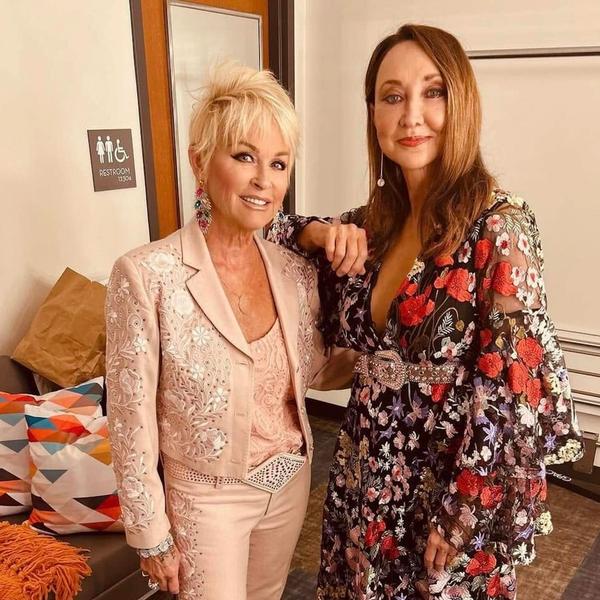
In 2009, that relationship found a creative outlet with Grits & Glamour, a touring partnership that brought their contrasting personalities and musical sensibilities together. Rather than dividing the evening between their respective greatest hits, the two embraced sharing the stage, lending harmonies to one another's signature songs, and allowing their friendship to become part of the performance. But according to Tillis, discovering that chemistry required patience from them both.
For two women accustomed to commanding their own stages, the challenge wasn't simply deciding which songs to perform. It was learning when to lead, when to step aside, and how to create something that belonged equally to both. “It's like the whole show is a dialogue”, Tillis explains during a conversation with Holler.
That dialogue became the foundation of a partnership. Neither woman abandoned her solo career, nor did they become a traditional duo. Instead, they developed a musical relationship that allowed each to retain her identity while exploring new dimensions of her artistry.
Their collaboration extended into the recording studio with 2013's Dos Divas, a 14-song collection of individual performances, original material, and duets. Moving between traditional country and more contemporary sounds, the album offered something beyond nostalgia: an opportunity for two established artists to experiment together.
Yet the significance of Grits & Glamour extends beyond its musical accomplishments. Tillis describes their relationship as something rare, particularly given the years they've spent traveling and performing together. Their friendship has carried them through personal challenges, professional demands, and the sacrifices of life on the road. “Lorrie and I are like an old married couple”, she laughs. “We're growing old together”.
There's a particular intimacy in that observation. While audiences encounter the glamour of the performance, the women share the hours of travel, exhaustion, and preparation that make those performances possible. Even after decades of experience, one sometimes needs the reassurance of the other. Tillis recalls evenings when one admits to feeling uncertain about a show, only to hear the other respond with a simple promise: “That's okay. I got you”. Beneath the playful competition and mutual admiration exists the comfort of knowing that neither woman has to carry the evening alone.
And the partnership shows little sign of slowing down. Grits & Glamour continues touring in 2026, with dates extending into 2027, including a scheduled appearance at Texas's Two Step Inn festival alongside Brooks & Dunn, Kaitlin Butts, Whiskey Myers, and others. The festival brings together established stars, independent voices, and younger audiences discovering the genre's traditional sounds. For Tillis, continuing to perform also challenges assumptions about aging in country music. “You can still do what you love to do”, she says.
More than three decades after establishing themselves as defining voices of the genre, Tillis and Morgan have found another measure of artistic fulfillment. Their partnership offers the pleasure of creating alongside someone who understands the extraordinary demands of the same journey. And perhaps that's its greatest achievement. Sharing the spotlight hasn't required either woman to surrender any of her brilliance.
Act III: The Sisterhood
The legacy of friendship and the women carrying it forward.
Country music has long celebrated camaraderie, though relationships between women in the industry have often been complicated by competition and commercial expectations. Yet enduring friendships reveal that some of the genre's greatest traditions exist not in the songs themselves, but in the relationships that make them possible.
For Tillis, that understanding began long before Grits & Glamour. She recalls seeing a theatrical production about the friendship between Patsy Cline and Loretta Lynn, two women whose bond became an enduring part of country music history. At the time, Tillis had yet to develop the friendship she would eventually share with Morgan. “That would be so cool to be friends with another female entertainer like that”, she remembers thinking. “And lo and behold, life delivered that to me”.
It's a remarkable connection, one that suggests the influence of country music's pioneering women extends beyond their recordings. Their relationships, too, have become examples for those who followed. For fast-emerging country artist, Hannah Dasher, the partnership between Tillis and Morgan represents something increasingly difficult to find. “Pam and Lorrie's partnership has been a beautiful reminder that such sisterhoods... are possible”, she reflects.
Dasher points to Patsy Cline's generosity toward Loretta Lynn and Bobby Bare's support of Waylon Jennings as examples of an earlier musical community in which artists understood that helping one another could strengthen the genre. She states, “That help-your-peer mentality didn't just foster mutual respect. It built the very foundation of country music”.
Yet Dasher is candid about the challenges facing today's performers. In an increasingly crowded musical landscape, she worries that a scarcity mindset has replaced some of that generosity. "A lot of people are kind but not necessarily supportive. So I've just been making my own pies," she says. Still, her experiences suggest the tradition is far from extinguished. Dasher recalls receiving an unexpected check from Reba McEntire after performing just three shows with the country legend, whose team also helped her secure a book deal for Stand By Your Pan. "Those shows changed my life,” she shares. Meaningful support isn't necessarily measured by the length of a relationship or the scale of a collaboration. Sometimes, extending an opportunity can alter another artist's career.
For one of Dasher's contemporaries, Kimmi Bitter, that generosity begins with a different understanding of success, one she increasingly associates with growing older and becoming more comfortable in her artistic identity. "Pam Tillis and Lorrie Morgan represent something I really love about getting older as a woman in music. Realizing that another woman's success doesn't take anything away from your own, “ she shares. Bitter sees something liberating in the way Grits & Glamour allows both women to remain themselves. She points out, "Grits & Glamour doesn't ask either of them to become less of themselves. If anything, their friendship seems to give them more room to be themselves and feel supported in that.”
It's an observation that speaks to the partnership's enduring appeal. Morgan's theatrical intensity has never required Tillis to abandon her wit, just as Tillis' conversational approach has never diminished Morgan's dramatic instincts. Their differences are part of what makes the collaboration compelling. For Bitter, who describes the independent artist's journey as frequently solitary, friendships with other women have offered confidence and reassurance. There are experiences unique to women in the music industry, she explains, that often require little explanation among those who have shared them.
That understanding resonates with Peytan Porter, another up-and-coming singer-songwriter who similarly recognizes the importance of celebrating individuality without allowing it to become a source of division. She ponders, "Pam Tillis and Lorrie Morgan are both such powerhouse vocalists and their ability to be uniquely themselves while still collaborating with and celebrating one another is a reminder that there is space for all of us female artists to do the same."
Porter sees that spirit in the relationships she's developed with other women in Nashville. While the music business can leave artists feeling isolated, she finds encouragement in gestures that might otherwise seem insignificant. She explains, "Whether it's a catch-up over drinks, a long phone-call or a comment on a post, I always feel seen and supported by the female artists here." Not every friendship results in a shared album or national tour. Some exist quietly, sustained through conversation, encouragement, and the reassurance that another person understands the demands of a creative life.
For Georgia country prodigy, Meg McRee, those relationships have become one of the most meaningful aspects of pursuing music. "My favorite women I've been lucky enough to make music with in town have taught me so much about how to find my own artistry and we celebrate our uniqueness and differences," she shares.
McRee also recognizes how the contemporary industry can complicate those connections. Social media, streaming metrics, and constant comparison have created new pressures for artists navigating an unpredictable profession. She worries that younger musicians risk losing opportunities to develop lasting relationships in an increasingly isolating environment. "We are also not guaranteed or owed any success in this business, but we can find a lot of joy in the relationships formed within it,” she states.
In an industry where recognition is uncertain and success can be fleeting, friendship offers something that cannot be measured by chart positions, ticket sales, or streaming numbers. "It's cheesy but the best thing I've gotten out of this career is friendship," McRee admits.
Perhaps that's what makes Tillis and Morgan's story particularly meaningful. Their friendship began long after each had established herself as a country music star, yet it has become another defining chapter in both careers.
The women following in their footsteps may never share a stage for fifteen years or record an album together. But in their generosity, encouragement, and willingness to celebrate one another, they are carrying forward a tradition that once inspired Tillis herself.
And for Tillis and Morgan, the reward is no longer simply another successful performance or another year on the road. It's the knowledge that someone who understands the journey is still standing beside them. After all, as Tillis reflects, "Anytime that you've got a friendship that you're stacking up decades, that is a gift, too."



Comments
Anyone can read the comments. You need a free account to post one.
Loading comments…
Keep it civil. Read our community guidelines.