


Link copied

Noah Kahan's new documentary, Out of Body, is finally available on Netflix. It's a deeply emotional but insightful look into the ‘Stick Season’ hitmaker's rise, and the personal challenges he faced after the success of that fateful 2022 album of the same time.
Given the Vermont native's dedication to improving mental health awareness throughout his career, both through his music and his trailblazing Busyhead Project, we expected this to be a vulnerable watch. But we didn't think it was going to be quite this moving, with Kahan opening up about a host of the mental health issues he's contended with in recent years, in particular, his body image struggles.
Out of Body also serves as a rich, evocative exploration into the ‘Northern Attitude’ singer-songwriter's relationship with his family, and his beloved home-state of Vermont.
The tension between his romanticisation of the latter and his jaded perspective on his more recent home of Nashville is the backdrop against which he crafts his new studio album, The Great Divide, with Kahan growing increasingly frustrated with his writers’ block over the course of the documentary. There's a hopeful ending, thankfully, with Kahan expressing how he does not have all the answers or an antidote to his pain, but he harbours a newfound determination to find them.
With Out of Body delivering a uniquely personal and in-depth look at Noah Kahan's life over the past few years, we break down the eight key takeaways from the documentary:
1. Noah was at his lowest during his highest moment of success
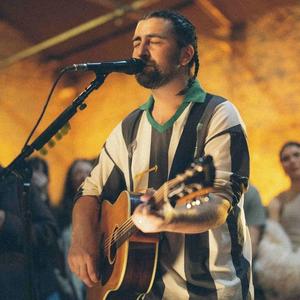
The cornerstone of the documentary is Kahan's Fenway Park double-header in 2024, with this being billed as the pinnacle of his career so far. Amusingly, he even jokes in a later segment that he declared he would retire whenever he managed to headline the legendary venue - a notion his manager didn't find as funny as he did.
However, despite putting on a spellbinding, histrionic show and excitedly gushing immediately after that it was one of the best nights of his life, he explains elsewhere that these shows arrived during one of the darkest periods he's ever experienced.
He reveals, “I don't think my mental health has ever been as low as it has been the last three months of my life”, before explaining, “I'm trying to run away from a lot of stuff right now”.
Interspersed with shots him getting angry while recording ‘The Great Divide’, Kahan bluntly confesses, “I don't give a f*** about music right now. I don't care. And it's such a bummer. Maybe that's just what I'm feeling, I'm just tired of being somebody else. Like, I don't see any of myself in me anymore. Like, I don't recognise myself”.
A central theme of Out of Body is how, when he was growing up in a “chaotic” and lively environment with his siblings, Kahan used music as his escape and something just for him.
Now, that escape has consumed his day-to-day life and his career, meaning that the ‘She Calls Me Back’ crooner longs for an escape from music when he's off the road.
2. He shares unreleased music
There are a few unreleased tracks that make their way into Out of Body. ‘Doors’ features prominently, with Kahan performing a large portion of the track during a studio session with his band and Gabe Simon. With Kahan teasing this extensively via social media in recent weeks, we're wondering if this will be the final single to drop before the full album, The Great Divide. The latter arrives on Friday, April 24th 2026.
Elsewhere in the documentary, we're privy to a real-time writing session at one of Kahan's beloved recording spots in Vermont with a childhood friend. There's no indication of whether this track is on the album, but it finds Kahan crooning wistfully over a pared-down guitar riff, “Told you I'd do the right thing / And write this in the right way / But I left tour with a sadness / Now I talk about my life in the past tense”.
There's a sweet moment where Kahan performs a song he wrote back in 2012 when he was in high school, seemingly called ‘Nobody’ or ‘In The Morning’. He quips, “I was still in high school at this point. This is one of the songs I thought, ‘This is a cool one’. I'd written a bunch of bad ones before. This is one that I really liked back then. The fact that I still remember it is pretty cool, ‘cause I never recorded it”.
As the credits roll, we also get a clip of ‘Pain is Cold Water (Live from Fenway Park)’. This is a longstanding fan-favourite, but alas, Kahan confirmed via X earlier in April that he hadn't managed to make it fit onto The Great Divide, “Pain is cold water is just one of those songs that wants to be left alone...Just doesn’t fit yall, it wasn’t right and I won’t release music that doesn’t feel 100% right for the album”.
It's clearly a song that means a lot to Kahan, though, and we think it sounds fantastic, so we're hoping the folk titan has plans to release it as part of a deluxe down the line.
What's evident throughout all of the snapshots we get into Kahan's writing and recording process is how he felt overwhelming weighed down by the pressure to emulate the success of Stick Season, which he managed to overcome by returning to Vermont.
3. He feels guilty about airing out his family's dirty laundry on Stick Season
There are a lot of scenes involving Kahan interacting with his family and his wife, Brenna, something fans have never really been allowed to witness much of until this point. This opens the door for a lot of heartfelt conversations about Stick Season, and how Kahan used the project to air out dirty laundry about his parents’ divorce.
It was never malicious, of course, but Kahan acknowledges that he should've perhaps checked with his family - particularly his parents - before getting that honest with his listeners.
There are a few moments where his mother, Lauri, for instance, admits she was a little hurt by some of his comments, such as when he jokes on-stage about recreating the family living room, but not being able to make it 100% realistic by bringing the divorce lawyers. These jovial moments have been a part of Kahan's set for years, but we've never really seen the less light-hearted reality behind them before.
At the end, though, there's a heartwarming conversation between Kahan and his mother about this while they watch old home videos, with Lauri underlining that she appreciates how Kahan's songwriting “humanised” the family. Even so, he still expresses regret at not checking in with his mother and father before releasing the music.
4. He has a long-running struggle with his body image
Kahan has always been incredibly - and inspiringly - open about his mental wellbeing, with his dad stressing in the documentary that the one thing he's most proud of about his son is how he has such a passion for improving mental health awareness.
However, a recurring theme throughout Out of Body is how, just because Kahan is brilliant at describing pain, it doesn't mean he's somehow found the solution to it.
It's easy to view Kahan's soul-stirring meditations on depression and anxiety on tracks like ‘Growing Sideways’ and ‘The View Between Villages’ as reflections on past struggles, from the perspective of someone who has made it out of that headspace.
But Kahan makes it clear that he's been struggling more than ever in the post-Stick Season years, with much of Out of Body coloured by a sheen of melancholy. This is most acute when Kahan discusses his longstanding difficulty with body image.
He foreshadows the conversation in clips of him packing for the road, with Kahan making light of how he's too “fat” to fit in most of his clothes, and then again after his Madison Square Garden show, when he immediately checks X, sees a photo of himself performing and quietly mutters, “God, I look fat”. It all seems like Kahan being his jokey, self-deprecating self at first, before he then opens up about how he uses these put-downs to mask how he's really feeling about the way he looks.
Kahan goes on to explain how body dysmorphia is something he's contended with for a long time, “I've always just really hated the way I look...It hasn't been something I've ever really spoken about. It's something I've struggled with my whole life...When I look in the mirror, I feel like I don't see what my body actually looks like...It's just something I've, like, silently struggled with for fifteen years now”.
Although difficult to watch, it's candid conversations on mental health like this - and like his interview with Jay Shetty delving into his OCD diagnosis - that are the connective tissue between Kahan and his fans. Here is a man seemingly on top of the world, breaking charts left, right and centre, yet he still struggles with his mental wellbeing, creating a channel of resonance and relatability for so many of his fans.
5. His dad's road accident completely altered their relationship
Partway through the documentary, Kahan recalls a moment that changed his life - when his dad got into a serious cycling accident, leaving him in a coma. Kahan was in eighth grade at the time, and he wells up as he recalls how that frightening period of time ended up altering their relationship. He describes his “already” weird and short-tempered father as becoming a lot more weird and short-tempered.
Kahan cites this as a “before and after in our lives”, and expresses remorse for how he treated his father growing up. He gets deeply honest about how he wishes he could see him more, and that when he does see him he feels himself getting frustrated. Ultimately, he confides, he struggles to figure out a way to let him be who he is.
It's a difficult narrative in the documentary, but ends up with Kahan and his father playing a song they used to perform together, with Josh then sharing some touching words of praise for his son, championing his work in the mental health space. This reflects the overall tone of Out of Body - there is lots of despair and anxiety about what's gone and what's next, but under it all, there is unmistakable hope.
6. He was about to give up music before his career-changing Cape Elizabeth EP
Kahan reiterates a point his made previously about how he was finding it tough to see the light at the end of the tunnel with his “slow burn” music career, before COVID-19 hit.
He's spoken about this before, with his subsequent Cape Elizabeth EP proving pivotal in his career, but we weren't aware of just how close Kahan was to calling it quits until now.
Again foreshadowing his eventual return from Nashville to Vermont at the end of the documentary, Kahan muses how moving home during COVID-19 gave him a new lease of life.
Kahan explains, “I think I was close to giving up music, or at least giving up hope, and then the pandemic came, and suddenly I was thrust back into Vermont. I was back with my little brother, my siblings, my mom my dad. And it selfishly felt really cool to have everyone in the same boat for a second...Creatively, it just woke me up...It finally felt like there was some kind of story in the music”. It seems Kahan has managed to at last rekindle this feeling for The Great Divide.
7. He describes his engagement to Brenna as “the best day of my life”
Family is a crucial theme - if not the crucial theme - of Out of Body, and Kahan offers a rare look at his relationship to his now-wife, Brenna. There are endearing clips of them hanging out at home, discussing Kahan's career and their move to Nashville.
One of the sweetest moments in the documentary is when Kahan proudly holds up a framed photo of him proposing to Brenna in Cabo, Mexico on July 17th, 2023, warmly hailing it as “one of the best days of my life. Maybe the best day of my life”. Brenna is hugely supportive of Kahan throughout the documentary, with Out of Body featuring a number of interviews with Brenna about Kahan's challenges and successes.
8. He never felt at home in Nashville
Perhaps rivalling “family” as the driving force of Out of Body is Kahan's perspective on place, home and belonging - and it's no accident these are also key pillars of Stick Season.
Kahan reflects on how he found it hard to ever feel settled and creatively stimulated in Nashville, where he'd been living since Stick Season, admitting he became burnt out.
He outlines how, ultimately, he hated feeling as though he could never switch off about his career and his next album, “It's never about me as much as it is down in Nashville, which I like. I do love Nashville, I love the people I have down there. But, like, it's all my career, all the time. Like, everyone around me is a musician, everyone's working on music. When I'm here [in Vermont], I feel like I'm in my home”.
This goes back to what Kahan touches on during the early portion of the documentary, where he cites music as an escape. When it dominates every conversation and element of his life, as it did in Nashville, it no longer feels like an escape. Aptly, Out of Body concludes with Kahan and Brenna returning to Vermont, a full-circle moment he hints at throughout the documentary, where he finds a revitalised sense of creative expression ahead of his new album, The Great Divide.
For more on Noah Kahan, see below, see below:
READ MORE:
- ‘Porch Light’ by Noah Kahan - Lyrics & Meaning
- ‘Paul Revere’ by Noah Kahan & Gregory Alan Isakov - Lyrics & Meaning
- ‘You're Gonna Go Far’ by Noah Kahan & Brandi Carlile - Lyrics & Meaning
- The Best Noah Kahan Songs
- ‘Northern Attitude’ by Noah Kahan & Hozier - Lyrics & Meaning
- Noah Kahan - We'll All Be Here Forever Tour: Dates & Tickets
- ‘She Calls Me Back’ by Noah Kahan & Kacey Musgraves - Lyrics & Meaning
- ‘Sarah's Place’ by Zach Bryan & Noah Kahan - Lyrics & Meaning
- Noah Kahan Concert Tour Setlist
- ‘Dial Drunk’ by Noah Kahan & Post Malone - Lyrics & Meaning