


Link copied

Zach Bryan’s sixth studio album With Heaven On Top is a 25-track sprawl that documents the personal chaos of the past few years of his life. It’s restless and overstuffed, but unmistakably intimate.
Bryan moves from the warmth of Byron Bay to the summer haze of London, with much of his heartbreak, anger, and self-scrutiny landing back in New York City. Across three relationships, tabloid-worthy headlines, and a steady undercurrent of identity reckoning, the album reads like a travelogue written in the aftermath.
The Oklahoman seems determined to pack every mile traveled and milestone reached—good and bad—into a single release, even offering acoustic reimaginings to satisfy those still chasing the sweat-soaked, phone-recorded Zach Bryan of old.
The result is uneven. Songs that might shine in isolation blur together, and the highs rarely peak as sharply as they could with less competition. Yet somewhere between the original tracks and their stripped-back counterparts - between the production, the lyrics, the mythology, and the noise - Bryan himself still cuts through.
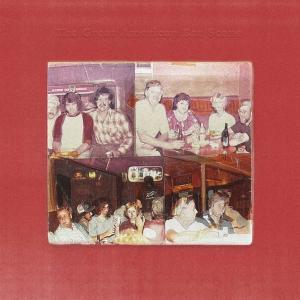
With Heaven On Top is written and produced entirely by Bryan himself, expanding on the brass-heavy, big-band textures introduced on The Great American Bar Scene and pushing that sonic pivot even further.
It’s a far cry from the infamous early recordings: sweaty, lo-fi dispatches built on an acoustic guitar and a Navy haircut, where a country-leaning Oklahoman with a fondness for Kerouac and Springsteen first emerged.
Still, with Bryan’s name on every byline, it’s hard to argue this sound isn’t authentically his. The seven years since his debut have unfolded faster and louder than anyone anticipated - his rambling, distinctly American poetry helping revive the singer-songwriter lane while racking up millions of streams, sold-out rooms, and relentless touring.
Bryan has already changed the game. The real question is whether his audience will let him change it again. The shift from an unsteady early twenties to a life shaped by expectation - “settle down and have some kids, be content with all of it” - has inevitably resculpted his songwriting. That tension defines With Heaven On Top. Artists evolve, whether we want them to or not, and growth rarely arrives in the form listeners are most comfortable with.
His solution: two albums.
With Heaven On Top is the product of Bryan immersing himself in his influences—performing constantly, listening obsessively, absorbing criticism, reckoning with his own flaws, and fully embracing a heavy horn section. So it comes as little surprise that just three days after the album’s release, he unveiled an acoustic version of the entire record.
“I’m assuming this record is just like all the other ones and there’s gonna be a billion people saying it’s overproduced and shitty,” Bryan wrote on Instagram, packing a remarkable amount of snide cynicism into a single caption. By pre-empting the backlash with a stripped-back counterpart - recorded alone so he “didn’t have to hear everyone whine about more stuff” - Bryan effectively released his own rebuttal.
Whether the gesture is aimed at fans, critics, his label, or his own persistent self-doubt is unclear. What is clear is that as he grows both with and against the industry, Bryan’s instinct remains the same: to throw everything he has at it, all at once.
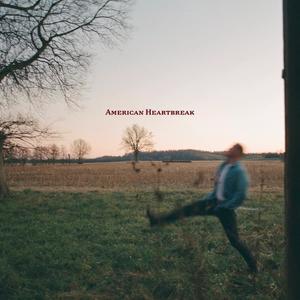
2022’s American Heartbreak captured a young man stumbling out of the U.S. Navy and into the first, disorienting complications of fame. With Heaven On Top documents the next phase: a man trying to understand what “real life” looks like when it’s measured in headlines, ticket sales, and nights spent playing to endless crowds.
Across the album, Bryan circles a longing for normality, wrestling with the knowledge that it may no longer be available to him. It’s the blunt reality of monumental success paired with a search for something recognisably ordinary. The full production of the original record reflects an artist embracing that shift, while the acoustic version reveals the man quietly changing alongside it.
Somewhere between the two sits the tension at the heart of With Heaven On Top. It’s clearest on tracks like “Sundown Girls,” where Bryan’s yearning for simplicity collides with the strangeness of fame: the universal comfort of watching the sun sink, but experienced from a stage in front of 70,000 people, in a country that isn’t your own.
The infatuation and admiration running through “Slicked Back” - a track shamelessly entangled with Tom Petty’s “Learning to Fly” - makes it an immediate album highlight. It crackles with energy: heavy drums, sweeping momentum, and lyrical hooks that land without effort. “I’m going to start a riot from the edge of my bed” feels knowingly indebted to Oasis’ “Don’t Look Back in Anger,” worn more as homage than imitation.
Alongside “Say Why,” it’s destined for Bryan’s now-iconic live setlists, built to fill arenas and justify the ever-growing cast he takes on the road. But the acoustic version serves a different, more quietly deliberate purpose. It showcases Bryan’s gift for instant nostalgia - capturing a moment with such sincerity that he seems to reflect on it before it’s even passed.
Stripped of its production, details that once sat buried are pulled into the lonely light of the room it was recorded in. Small choices become telling: a lyric shifts from a girl who likes “ruling the world” to one who’s “ruling my world,” a subtle revision that reveals the benefit - and intimacy - of returning to his own words.
The acoustic version of “South and Pine” leaps ahead of the original. A track that might otherwise be skippable transforms into an intimate tableau: Bryan on a bed that isn’t his, in a house he doesn’t know, with only a girl on his mind and a guitar in his hands as anchors of familiarity. Stripped of swelling strings, distant horns, stepwise piano, and layered female harmonies, it becomes pure, folk-leaning simplicity.
On “Cannonball,” the rhyming of “thief,” “teeth,” and “police” lands with more weight in the quiet, letting small glimpses of lyrical brilliance cut through production clutter. On “Plastic Cigarette,” monotonous verse melodies gain texture through Bryan’s rhythmic vocal delivery, and the stop-and-strum of the acoustic guitar frames the song’s bittersweet reflection with newfound clarity.
Many have hailed the artist as the future of music, or even the young hero of American literature, his words have been tattooed on minds and bodies, and claimed permanent positions on playlists. However, the other side of the coin sees Bryan’s primary source of criticism rooted in claims that he’s too reliant on the same chord progressions and lyric structures.
For the most part With Heaven On Top flows easily enough—you could play it while making breakfast or on a long drive without skipping tracks. The problem is, you probably won’t remember most of it. The sprawling tracklist leaves clever quips and subtle details struggling to stay afloat in the waves of songs that follow. Predictability can be tiring, and a mere seven years into a career destined to last a lifetime is no time to get tired.
The moments on With Heaven On Top with the most life in them suggest a desire for development. The jumps don’t have to be huge - we’re not asking for a “Dylan goes electric” scenario - just something to break up repetition and give us a sign of where Bryan could be moving towards.
As the tales keep coming , tracks like “Miles” reveal Bryan’s Nebraska-esque Springsteen confidence, blending twisted sarcasm, dismissal, and self-reflection. Unlike other forgettable songs , it’s a very promising glimpse of the direction he could be heading. Simple in arrangement, it gives his vocals room to take a tentative step forward. Lines like
“truckstop food and rainy weather always get me goin’ / I’ve been drinkin’ wine for breakfast, eggs and bacon make me restless”
capture a developing maturity within classically youthful writing. Its almost bluesy swagger places it among Bryan’s quietly underrated gems. He can deliver this acoustically, or in his emerging makeshift full-band style—but offering both versions in such abundance sometimes dulls the warmth that makes these moments special.
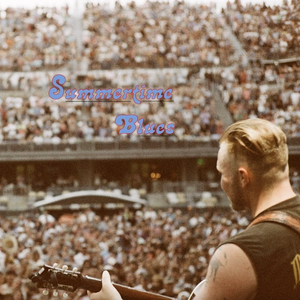
Perhaps what we really needed from Bryan’s latest offering wasn’t two versions of the same album, but two distinct projects, à la American Heartbreak/Summertime Blues. An acoustic EP could highlight his gift for turning words into sentence-long stories, while a shorter studio album could lean fully into the “overproduced” sound he’s moving toward.
This isn’t about one album being better than the other—it’s just too much to take in at once. If that’s the intention, it mirrors the chaos of Bryan’s recent years. But for the listener, it’s overwhelming.
Bryan is still navigating the basics of his ever-evolving place in the world. With Heaven On Top doesn’t feel fully complete—but perhaps that’s because he isn’t, either. When an Oklahoman artist can lean into country-folk, perform spoken-word poetry, spin Springsteen-style storytelling, or channel Petty’s electric energy, what would “complete” even sound like?
The answer may not come soon, and will likely require more of Bryan’s lengthy self-examinations. In his own words, he’s simply trying to “get through hell with heaven on top”—and who’s to say how long that journey will take?
For more on Zach Bryan, see below: