


Link copied

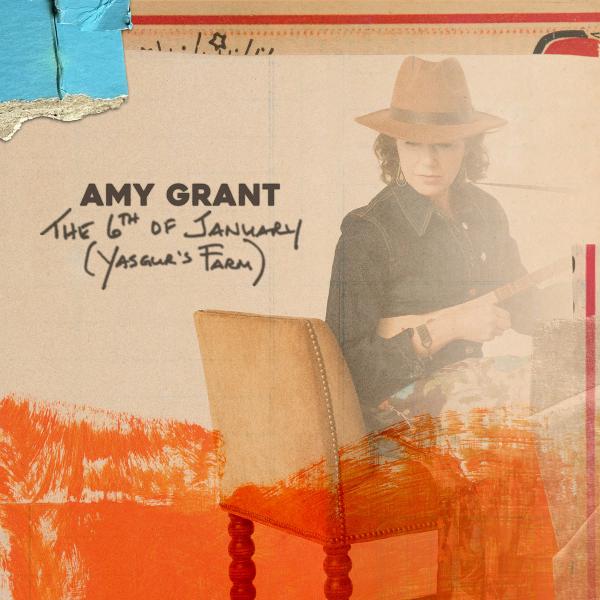
Everything you need to know about the timely 2026 Americana folk song from American singer-songwriter Amy Grant, once hailed as "The Queen of Christian Pop"
- Song ‘The 6th of January (Yasgur's Farm)'
- LyricsShe says maybe it’s the time of year
Or maybe it’s the time of man
60’s playlist and a beer
I’m suddenly 16 again
What’s the future hold in store... - Artist(s) Amy Grant
- Released January 6, 2026
- Label Amy Grant Productions via Thirty Tigers
- Songwriter(s) Sandra Emory Lawrence
- Producer(s)
The Background:
A timely standalone single from six-time GRAMMY Award winner and 2022 Kennedy Center Honoree Amy Grant's 'The 6th of January (Yasgur’s Farm)' is taken from her first album of all-original material in over a decade.
Produced by ten-time CMA winner and Nashville Songwriters Hall of Famer Mac McAnally, the song explores themes of healing, unity, and human and spiritual connection, asking how we sit with the unrest of the world without rushing to conclusions about how to fix it. Rather, the song poses a more universal question: have we all lost our way? Drawing inspiration from the idealism of the Woodstock era and the lessons learned in the intervening years, 'The 6th of January (Yasgur’s Farm)' is more reflection than polemic.
With references to Woodstock, Harper’s Ferry, and John Lennon, 'The 6th of January (Yasgur’s Farm)' suggests that while there is still work to be done, all is not lost, and that hope may lie in choosing to move forward together. The lyrics of the song invite listeners to sit in uncertainty, see the world through another’s perspective, and recognize the strength found in collective understanding.
With a career spanning more than four decades, Amy Grant has garnered over 2.2 billion streams worldwide, sold more than 30 million albums, and earned six GRAMMY Awards. A trailblazer in Contemporary Christian Music, Grant became the first artist in the genre to achieve a platinum record, reach No. 1 on the Pop charts, and perform at the GRAMMY Awards, leading to her being hailed as "The Queen of Christian Pop."
Her honours include stars on the Hollywood Walk of Fame and Music City Walk of Fame, induction into the Nashville Songwriters Hall of Fame and being honoured with the Woman of Courage Award at the American Heart Association Gala in New York City in 2026.
The Sound:
Sonically reminiscent of Joni Mitchell and 70s Laurel Canyon folk, the song begins with a lightly strummed mandolin and some light tropical rock percussion before opening up into fuller production with electric guitar and a full drum sound.
The Meaning:
She says maybe it’s the time of year
Or maybe it’s the time of man
Set on the 6th of January, these opening lines could allude to a conversation the singer is having with another woman about the events that took place on that date in 2021 when a mob of supporters of the Republican president Donald Trump attacked the US Capitol Building in Washington, DC, to disrupt a joint session of Congress certifying the 2020 presidential election results.
60’s playlist and a beer
I’m suddenly 16 again
A playlist of songs and a beer transport the singer back 60 years to a time in the late '60s when there was similar political upheaval and global turmoil marked by widespread anti-establishment movements, student protests (especially against the Vietnam War), civil rights activism, and countercultural shifts, leading to significant social and political unrest in America and internationally.
Although Amy Grant, born in 1960, would only have been eight or nine years old in the late '60s, the political and social reverberations of that time would still have been being felt when she was a teenager in the mid '70s.
What’s the future hold in store
What’s it hiding up its sleeve
All that wide-eyed hope
Were we so naive
Grant wonders once again what the future will be like, just like she did when she was a16-year-old, as she reflects on how she used to feel more positive about the future. She wonders if this was a combination of innocence, lack of experience and a belief in the inherent goodness or simplicity of the world, which often leads to idealism and openness.
Younger people are generally more hopeful and optimistic about their own future compared to older adults, often viewing the world with less cynicism and more possibility, though this can shift with age due to responsibilities, experiences, and current global events, with some studies showing happiness dips in middle age before rising again later in life.
Hey mister where’s the road to Yasgur’s farm
He stares at me with pity and alarm
Says that crowd left here long ago
Scattered all to hell and Harper’s Ferry
On the 6th of January
Grant asks the way to Yasgur's Farm, both literally and metaphorically, as she wonders if humans can get back to that feeling of "wide-eyed hope" she experienced in the late '60s.
Yasgur's Farm was the dairy farm owned by Max Yasgur in Bethel, New York, that famously hosted the legendary Woodstock Music and Art Fair in August 1969, attracting half a million people and becoming a defining cultural moment for the 1960s counterculture.
The stranger she is talking to tells her that the hippies, who embodied the era's counterculture, left a long time ago, both physically and in terms of their ideologies.
I’m shopping for some groceries
Muzak piped in overhead
They only play the melody
I hear the words John Lennon said
Asking me to imagine
The singer is shopping when she hears an instrumental Muzak version of John Lennon's 1971 song 'Imagine' playing and it reminds her of the song's message. The lyrics of 'Imagine' encourage listeners to imagine a hypothetical world of peace, beginning with living without organised religion and its concepts, without economic commercialism and capitalism and without borders separating nations. Written in March 1971 during the Vietnam War, the song has become a permanent protest song and a lasting emblem of hope.
Muzak is a brand name that became synonymous with a style of instrumental background music, often called "elevator music," designed to be unobtrusive in public spaces like elevators and shops.
Like 'The 6th of January (Yasgur's Farm),' 'Imagine' isn’t about abolishing religion and countries and possessions, it’s about breaking down the walls that keep us from connecting with each other and preaching kindness and unity between one another, not letting things like religion, nationality or material status get in the way of how they view each other. At a time when Christian conservatism is becoming so tightly tied to right wing politics, both songs function as a timely reminder of the true message of Christianity.
As I fight this cart with crooked wheels
He’s either bent over laughing
Or spinning in his Strawberry Fields
Shopping carts are notorious for having wheels that don't turn properly due to heavy use, neglect, weather exposure, debris buildup such as dirt and rust and worn-out bearings or casters, despite myths about shops making them with this deliberate "ungainly" design to make customers shop more slowly. The uncontrollable shopping cart here works as a metaphor for the way humans have lost control of their own destiny in some sense.
The "Strawberry Fields" reference is to 'Strawberry Fields Forever' is a song by the English rock band the Beatles, written by John Lennon and credited to Lennon–McCartney. Grant uses it to stand in for the idea of Lennon "turning in his grave," an idiom used to describe an extreme level of shock or an intense level of surprise and is expressed as the vicarious sentiment of a dead person.
And we’re driving home and the radio plays
What’s goin’ on? Marvin Gaye
Is it right on red or left on MLK
I look ahead and realize we’ve lost our way
On the way home from the grocery store, Grant hears soul singer Marvin Gaye's 1971 song 'What's Going On,' a poignant protest anthem addressing war, poverty, and injustice with pleas for love and understanding, inspired by social unrest and the Vietnam War era. Like 'Imagine,' it was a landmark in socially conscious music and Grant is aligning herself with this particular lineage of protest music by referencing them.
She asks metaphorically for directions, asking if she should turn right on a red light or left onto a road named after Martin Luther King Jr., which is a common street name across America, often designated in honour of the civil rights leader. When Grant looks at the options, she realises we as humans have "lost our way" spiritually.
Hey mister where’s the road to Yasgur’s farm
He stares at me with pity and alarm
Says that crowd left here long ago
Scattered all to hell and Harper’s Ferry
On the 6th of January
On the 6th of January
Harpers Ferry is a historic town in West Virginia, famous for its pivotal role in American history, especially around the Civil War, where John Brown - a radical American abolitionist who believed in using violence to end slavery - made a failed raid on the federal armory to incite a slave rebellion in 1859, an event widely considered a primary catalyst for the American Civil War.
The town's history, particularly John Brown's abolitionist raid, resonates with counter-cultural themes of challenging the status quo and attracts modern-day hippies and counter-culture types due to its rich history, natural beauty along the rivers alongside shops selling spiritual goods like crystals, incense, and unique crafts that create a blend of historical reverence and bohemian vibes.
Ultimately, while the title could indicate a stance on the political spectrum, it is quite the opposite. The song asks the question, haven’t we all lost our way? With references to the idealistic era of Woodstock and the hope for something better, the song is more of a question than a commentary, asking how do we sit in the unrest of the world without jumping to conclusions on how to ‘fix it’?
For the full lyrics to Amy Grant's 'The 6th January (Yasgur's Farm)' see below
She says maybe it’s the time of year
Or maybe it’s the time of man
60’s playlist and a beer
I’m suddenly 16 again
What’s the future hold in store
What’s it hiding up its sleeve
All that wide-eyed hope
Were we so naive
Hey mister where’s the road to Yasgur’s farm
He stares at me with pity and alarm
Says that crowd left here long ago
Scattered all to hell and Harper’s Ferry
On the 6th of January
I’m shopping for some groceries
Muzak piped in overhead
They only play the melody
I hear the words John Lennon said
Asking me to imagine
As I fight this cart with crooked wheels
He’s either bent over laughing
Or spinning in his Strawberry Fields
Where’s the road to Yasgur’s farm
He stares at me with pity and alarm
Says that crowd left here long ago
Scattered all to hell and Harper’s Ferry
On the 6th of January
And we’re driving home and the radio plays
What’s goin’ on? Marvin Gaye
Is it right on red or left on MLK
I look ahead and realize we’ve lost our way
Hey mister where’s the road to Yasgur’s farm
He stares at me with pity and alarm
Says that crowd left here long ago
Scattered all to hell and Harper’s Ferry
On the 6th of January
On the 6th of January
--